0+0
Han Roro · 한로로
0+0 is the closing track of Jamong Salgu Club (자몽살구클럽), the third EP by Korean singer-songwriter Han Roro (한로로), written and composed by the artist, and released on 4 August 2025.
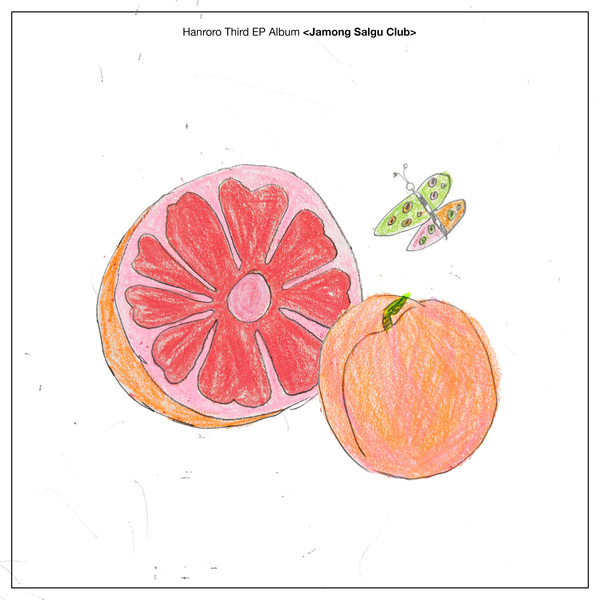
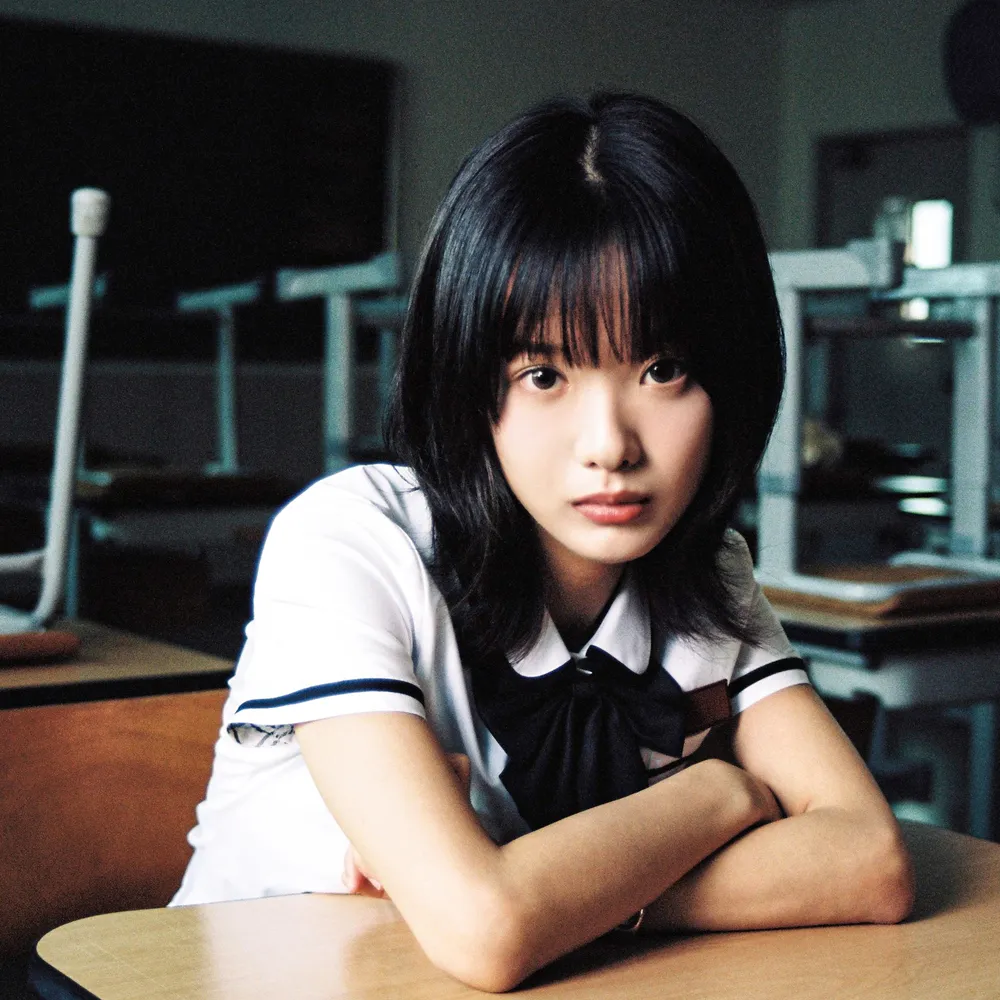
Han Roro — born Han Jisoo (한지수) — debuted in March 2022 with the single Ipchun (입춘, The First Day of Spring). Since her debut she has built a following that extends well beyond the indie scene she started in, and Jamong Salgu Club marked a significant step in that trajectory. 0+0 in particular has taken on a life of its own — still circulating widely across social media and streaming platforms.
The EP did not arrive alone. Han Roro published a novel under the same title shortly before its release — a story about four middle school students who form a secret club, each carrying their own reasons for not wanting to go on, and each making a quiet promise to hold on a little longer. The novel and the EP were designed together: Han Roro has described the album as a kind of soundtrack to the story, with each track following the novel’s arc in sequence. 0+0, as the final track, sits at the end of that arc.
What follows, however, is a reading of the song on its own terms. I have not had the chance to read the novel, and it would not be honest to write as though I have. Han Roro has spoken warmly about listeners arriving at their own readings — ones that diverge from the novel’s specific context entirely. That openness seems deliberate. The interpretation here is drawn from the lyrics, and from the song as it exists when you press play without any other text in hand. Readers who have read the novel might find additional layers that this reading doesn’t reach. That is entirely appropriate. Translations are rarely definitive, and neither are interpretations.
0+0 Official Music Video
0+0
Not every song title asks to be carried into another language. 0+0 makes no such request. There is nothing to render into English — no verb to carry across, no image to reconstruct, no register to negotiate. The title arrives as a formula, and stays that way. And yet, for a Korean listener, it does something that arithmetic has no business doing.
The first layer is phonetic. Korean has two ways of reading zero. The native word is gong (공) — used in phone numbers, bus routes, the unremarkable zero of daily life. The Sino-Korean reading is yeong (영), which belongs to a different register: more literary, more weighted, etymologically entangled with words about time and permanence. 영원 (yeongwon) means eternity. 영면 (yeongmyeon) — literally “eternal sleep” — is the word used for death. And 영영 (yeong-yeong), built by doubling the syllable, means forever, or never again, depending on what follows it. Read the title as yeong rather than gong, and the formula shifts: 영 + 영 = 영영. Zero plus zero equals forever.
The second layer is visual, and easier to miss. Place two zeros side by side and look at the shapes: 0+0. Tilt the reading slightly, and the pair of circles begins to suggest something else — ∞. The symbol for infinity. The arithmetic remains flat and unarguable on the surface. But arranged just so, the notation itself becomes a different kind of statement: not addition, but transformation. Two absences, and the result is not zero. It is endless.
The third layer is the one Han Roro has spoken about most directly, and perhaps the one that holds the other two together. She has said that she often thinks of herself as closer to zero than to one — and on harder days, less than zero. Not nothing in the dismissive sense, but nothing in the quietly painful one: the feeling of having little to offer, little to stand on, little that adds up to much. She has also said that when something she loves meets something else she loves — not necessarily a person, but anything she holds dear — she finds herself able to keep going.
0+0 is, in that sense, a private equation turned inside out. The mathematics says nothing changes when you add zero to zero. The song disagrees. Two people who feel like nothing, meeting — and out of that meeting, the possibility of dreaming of forever. That is the premise the title proposes before a single lyric has been heard.
Han Roro has put it simply: even people who feel like nothing can dream of forever. The title holds all of that — the phonetic pun, the visual suggestion, the personal origin, the open invitation — without collapsing any of it into a single fixed meaning. That refusal to resolve is not a flaw in the title.
Korean / English Lyrics
Let’s go find the blind spot in all those dark eyes
여름 코코아, 겨울 수박도 / 혼나지 않는 파라다이스
Hot chocolate in summer, watermelon in winter / A paradise where no one tells you you’re wrong
앞서가는 너의 머리가 / 두 볼을 간지럽힐 때 / 나의 내일이 뛰어오네
When your hair, walking ahead, / brushes against my cheeks / my tomorrow races toward me
난 널 버리지 않아 / 너도 같은 생각이지?
I won’t leave you / You feel the same, right?
저 너머의 우리는 결코 우리가 될 수 없단다
The us on the other side can never become us
영생과 영면의 차이를 너는 알고 있니?
Do you know the difference between eternal life and eternal sleep?
멍든 발목을 꺾으려 해도 / 망설임 없이 태어나는 꿈
Even when I try to break my bruised ankle / Dreams are born without hesitation
난 널 버리지 않아 / 너도 같은 생각이지?
I won’t leave you / You feel the same, right?
저 너머의 우리는 결코 우리가 될 수 없단다
The us on the other side can never become us
아, 난 널 버리지 않아 / 너도 같은 생각이지?
Ah, I won’t leave you / You feel the same, right?
난 우리를 영영 잃지 않아 / 너도 영영 그럴 거지?
I will never lose us / You will never lose us either, right?
Any attempt to interpret a song is, at its core, an act of presumption. The words on the page are the same for everyone; what they mean is not. What follows is my own reading — shaped by the choices I made in translation, the lines I kept returning to, and the particular way this song has settled in me. Others will hear it differently, and they will not be wrong. I offer this not as the meaning of the song, but as one way of sitting with it.
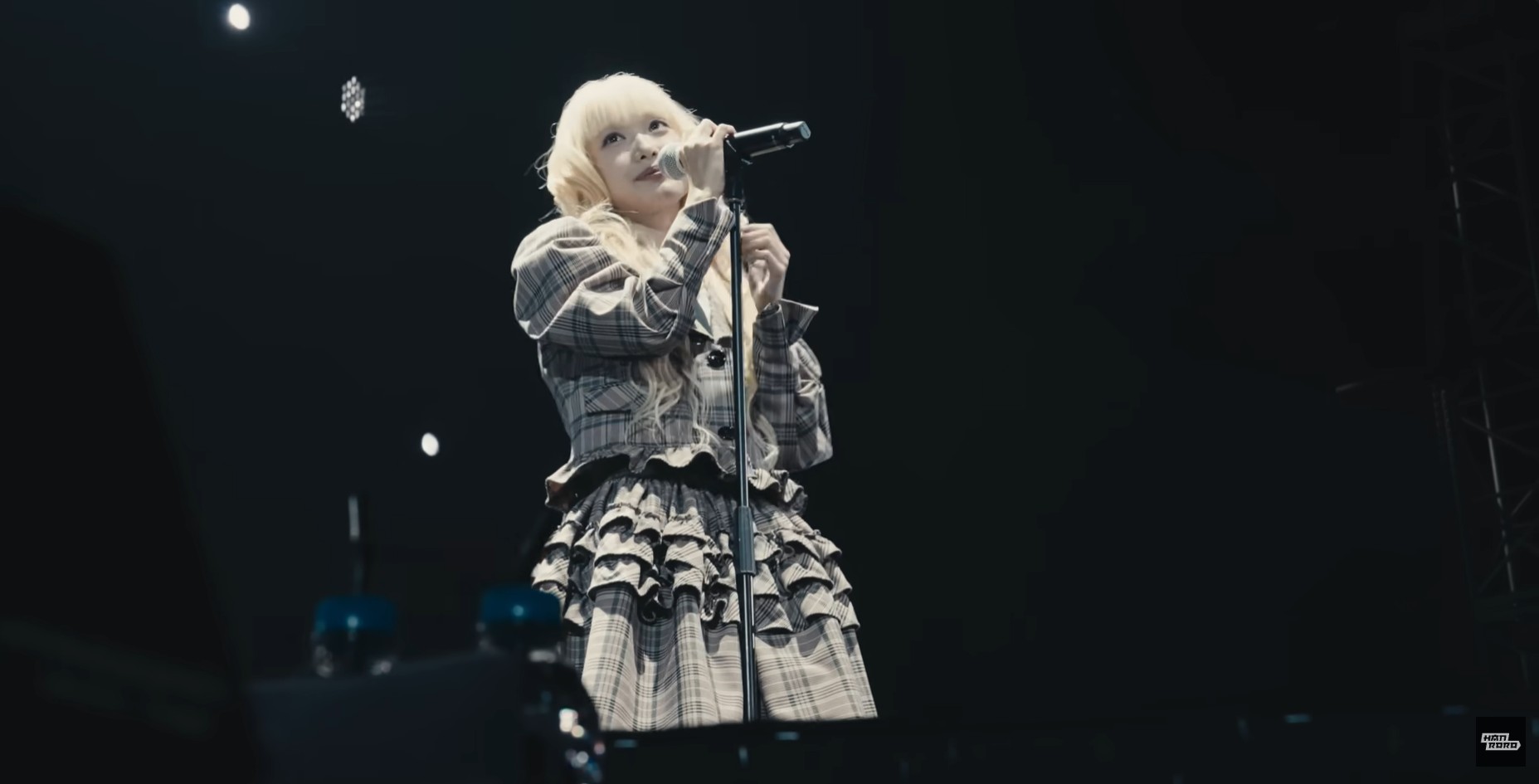
0+0 Live performance 2025/11/22~23
Line by Line
The line opens in quite an obscure way. No possessive is attached to 검은 눈동자 — the dark eyes appear without an owner. Korean grammar does not require a subject the way English does, and the absence here is not an oversight. It is the default mode of a language that often leaves the speaker or the listener unspecified, allowing both to remain present without being pinned down. “All those dark eyes” does not point to any single person. It can mean whoever is watching. In this case: everyone.
사각지대, literally “dead-angle zone,” is a term drawn from military and architectural usage. It refers to the area that falls outside a given line of sight. A blind spot. Not darkness, but the place where vision simply does not reach.
A note on 검은 눈동자. In Korean, 눈동자 refers specifically to the pupil or iris — the dark center of the eye — and is commonly used as a poetic stand-in for the eye itself, or for a person’s gaze. 검은, meaning black or dark, is not a dramatic modifier here. For most Koreans, dark eyes are simply the default — the descriptor carries no particular weight in Korean the way it might in English, where eye color varies widely enough that specifying “dark” feels like a choice.
The lines that follow make clear what kind of blind spot the song has in mind. 여름 코코아, 겨울 수박 — cocoa (hot chocolate) in summer, watermelon in winter. Both are harmless inversions: drinks and fruits out of season, the kind of small preferences that invite correction. 혼나지 않는 파라다이스 — a paradise where you don’t get told off. The pairing is telling. The blind spot is not a hiding place from danger. It is a hiding place from judgment — from the looks and the comments and the quiet corrections that accumulate around anyone who does things in a different way.
All those dark eyes, then, are not any single gaze. They are the aggregate: everyone watching, everyone with an opinion about what you should want and when you should want it. The blind spot in all those dark eyes is the place they cannot see — and the song’s opening move is to suggest that such a place exists, and that it is worth looking for, and that it is better found together.
A small note on 머리 before going further. In Korean, 머리 literally means “head,” but in everyday use it does double duty as the word for hair — specifically, the hair on one’s head. Context decides which meaning is active. 머리가 아프다 means having a headache, whereas 머리를 자르다 means to get a haircut. Here, what brushes the speaker’s cheeks is clearly hair.
The scene itself is small and specific: 너 (you) are walking a step ahead, close enough that the hair grazes the speaker’s face. In Korean, 간지럽히다 sits comfortably in lyrical and poetic contexts: a breeze can 간지럽히다 a cheek; sunlight can 간지럽히다 the eyes; a memory can 간지럽히다 the heart. It describes a touch barely there, but felt — a contact almost too small to register, except that it does. The English “tickle” seemed to tilt more readily toward the playful or the childish, and some of that softer, lyrical register is unavoidably lost in translation. Thus, the translation used here is “brushes against.”
What that small touch of hair does in the song is disproportionate to its size. 나의 내일이 뛰어오네 — my tomorrow comes running. Or, in this translation, races toward me. The verb 뛰어오다 is active and physical: tomorrow is not arriving in the slow, inevitable way that tomorrows usually do. It is sprinting. And it is sprinting because of something almost too small to name — a strand of hair, a moment of contact, the simple presence of someone walking a step ahead.
The Korean verb 버리다 — translated here as “leave” — sits at the heart of this passage. Its literal meaning is closer to “throw away” or “discard”: it is the verb you use for trash, for things you no longer want. But Korean extends it readily into the realm of human relationships, where 사람을 버리다 (“to throw a person away”) describes the act of severing ties — most often in the context of love. To 버리다 someone is to walk away from them in a way that leaves no room for return. The English “abandon” may be closer to the lexical meaning, but its register is too clinical, too weighted with the language of neglect and crisis. “Leave” gives up the harshness of 버리다 but keeps the essential motion: the speaker as the one who could walk away, choosing not to.
The line that follows is gentle but worth pausing on. 너도 같은 생각이지? — you feel the same, right? In Korean, the sentence-ending particle ~지? carries the weight of a question that is not quite a question. It seeks confirmation of something the speaker already half-believes, half-hopes, half-needs to hear out loud. It is the particle of quiet seeking, of asking for reassurance without quite asking outright. “Right?” in English approximates this, but the Korean has a softer edge — closer to “…don’t you?” murmured almost to oneself. The speaker is not really asking. They are offering the listener a chance to say yes, and trusting that they will.
What is “저 너머,” the other side? It could be read as the space beyond death — the afterlife, the eternity that religions and philosophies have promised, somewhere where lost things might be restored. The song’s answer is firm: that other side, whatever it is, cannot give us back to ourselves. The us that exists in some imagined eternity is not us.
The ending particle ~단다 in the final line is worth noting too. It is a softly didactic ending — the tone an adult might use to tell a child something important and true. The speaker is not arguing with the listener. They are stating, gently, what they have come to know. There is no eternity that will carry us forward as ourselves. There is only this.
This line turns on a pair of words that English cannot match in a single move. 영생 (永生) means eternal life. 영면 (永眠) means eternal sleep — and in Korean, it is the standard euphemism for death. The two words share an opening syllable, 영 (永), the same character that means “eternal” and the same sound that runs through the title and through the song’s closing promise of 영영 (forever, or never). In Korean, they sit side by side like mirror images: same first half, opposite second half. Life that does not end, sleep that does not end. Two forms of forever, pointing in opposite directions.
English has no shortcut for this. “Eternal life” and “eternal sleep” are the literal renderings, and they do carry the necessary contrast, but they cannot reproduce the Korean compactness — the way 영생 and 영면 are each a single two-syllable word, perfectly symmetrical, with the shared 영 acting as the hinge. Reading the line in Korean, you hear the question almost before you parse it: which of these two eternities is the one you mean? The translation has to spell that out where the Korean simply lets it ring.
What the speaker is asking is not, on the surface, complicated. The two eternities are easy to tell apart — one is life, one is death. But the question is being asked, which means the speaker thinks it might not be obvious. Or that the listener might be confusing them. Or that the speaker themselves has been confusing them. The line refuses to clarify which.
The next two lines do something quiet and devastating. 멍든 발목을 꺾으려 해도 — even when I try to break my bruised ankle. The image is of self-injury, and a particular kind: not a fresh wound but one inflicted on a place already hurt. The ankle is bruised. The speaker tries to break what is already damaged.
And then: 망설임 없이 태어나는 꿈 — dreams are born without hesitation. The verb is 태어나다, the same verb used for birth. Where the previous line had a verb of breaking, this line has a verb of beginning. Where the previous line had hesitation implied in the word 꺾으려 해도 (“try to,” with all its uncertainty), this line has 망설임 없이 — without hesitation. The contrast is structural. The speaker reaches to break themselves; a dream answers by being born. Not slowly, not tentatively. Immediately. Without thinking about it.
The translation cannot quite carry all of this. “Dreams are born” gets the verb of birth, and “without hesitation” gets the immediacy. What is harder to preserve is the way the line works as a counterweight: the suddenness of life rising up exactly where death was being attempted. Even so, the essential image carries. You may not catch every layer of the wordplay between 영생 and 영면, you may not feel the full weight of 꺾으려 해도 against 태어나는, but you can feel what these lines are doing. They are about a person trying to end and being unable to. About a body reaching toward death and being interrupted by something that wants to live. About the way, in the worst moments, something small and stubborn keeps starting over inside us, without being asked.
The word the song has been waiting for: 영영.
The doubled syllable. The title finally pronounced aloud. The two zeros of 0+0 spelled out in the language they have been hiding inside since before the song began. Everything the title proposed — that two people who feel like nothing can dream of eternity, that the arithmetic of absence can still arrive at forever — lands in this single word. The song has been holding it back until now, and when it finally arrives, it arrives twice. Once in the speaker’s promise (난 우리를 영영 잃지 않아), and once in the question that follows (너도 영영 그럴 거지?).
The translation reaches 영영 through “never,” which is the route English makes available. Korean 영영, used in a negative sentence, carries both meanings at once: never, and forever. I will never lose us and I will not lose us, ever and I will hold onto us forever are, in Korean, the same sentence. In English, “forever” sits awkwardly inside a negative sentence. The word’s natural home is the affirmative; it likes to attach to things that will happen, not things that won’t. To express 영영 in the negative, English has to pivot to “never,” which gives up the explicit shape of forever but keeps its absoluteness intact. The reader who has been following the song from the title will hear forever folded inside it — because that is what the title has been pointing at all along. 영 + 영 = 영영. Zero plus zero equals forever. The equation has been waiting since before the first line, and only now does the song write it out.
The final line — 너도 영영 그럴 거지? — returns one last time to that soft confirmation-seeking particle, ~지?. The translation renders it as right?, and once again the English approximates rather than matches. The Korean carries the trembling of a question that is not quite asking, an offering of a yes the speaker hopes the listener will give. The promise has been made; the speaker has put down their half of the forever. They are waiting, gently, to hear the other half.
Closing thoughts
I came to this song because the title intrigued me. It was a kind of visual puzzle that draws the eye before it draws the ear. But the deeper I went into the lyrics, I found there was more than meets the eye.
The song ends without answering. We do not hear the listener say yes. We do not need to. The arithmetic of the title is complete: 0 + 0 = 영영. Two zeros, two people who felt like nothing, meeting and producing — through nothing more than the fact of having met — a forever that neither of them could have made alone. The promise has been spoken. The question has been asked. What happens next belongs to whoever is listening, who, as the title quietly insisted from the beginning, was always going to be the one to step into the empty space and finish the equation.
And that, perhaps, is the song’s quietest argument: that the forever it offers is not metaphysical, not promised by any other side, but made — by two people, in the time they have, in the small space they manage to clear for each other away from all those watching eyes. The song does not insist that this is easy. It only insists that it is possible.
Discover more from Translating Korea
Subscribe to get the latest posts sent to your email.