Where the Wind Finds Me
바람이 불어오는 곳
Kim Kwang-seok · 김광석
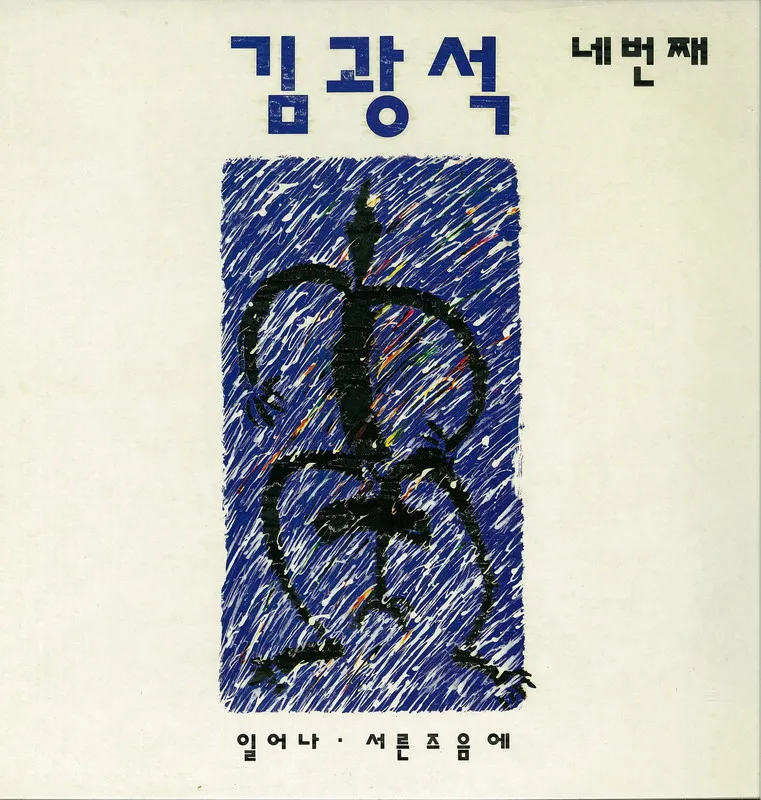
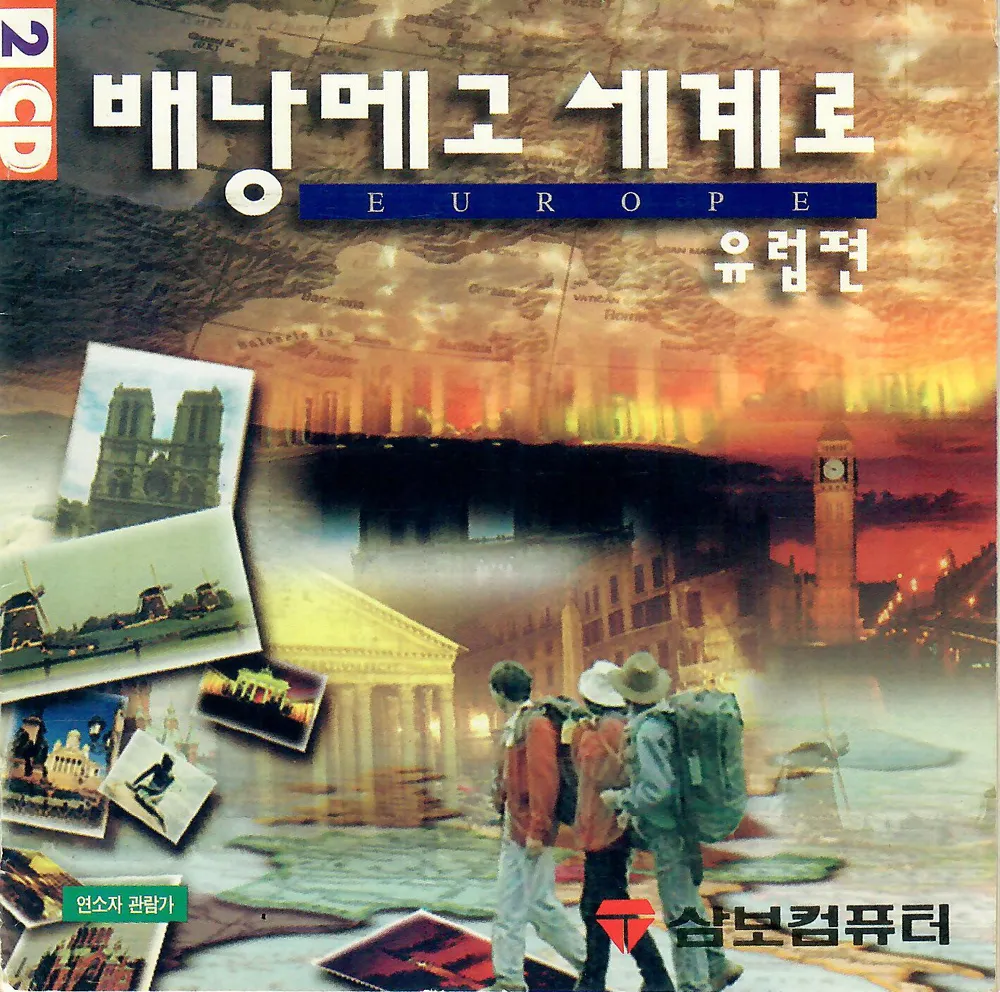
“바람이 불어오는 곳” was written and composed by Kim Kwang-seok, released in 1994 as part of his fourth album, 김광석 네번째. Its origins are perhaps surprising: it was commissioned as the theme for 세계는 넓다, 배낭메고 세계로, a Korean television travel program that sent young backpackers around the world and documented their journeys.
What began as a travel theme has since become something harder to categorize. It closed the final episode of Reply 1988 (응답하라 1988), playing over the last image of a neighborhood that time has since changed beyond recognition. It runs through the Disney+ series The Light Shop (조명가게) not as background music, but as something closer to a pulse. It has also been covered by artists across generations and the list keeps growing.
Thirty years on, the opening notes are immediately recognizable to countless people who grew up with Korean music. Songs that last this long are not accidents. They last because they keep finding people at exactly the right moment.
Korean / English Lyrics
Where the wind finds me, that is where I go
그대의 머릿결 같은 나무 아래로
Beneath the trees that sway like your hair
덜컹이는 기차에 기대어 너에게 편지를 쓴다
As the train rattles on, I lean against the window and write to you
꿈에 보았던 길 그 길에 서 있네
Here I stand on the road I saw in my dreams
설레임과 두려움으로 불안한 행복이지만
With hope and fear, happiness is uncertain
우리가 느끼며 바라볼 하늘과 사람들
The skies and faces we’ll feel before our eyes
힘겨운 날들도 있지만 새로운 꿈들을 위해
Some days will weigh on us, but for the sake of dreams to come
햇살이 눈부신 곳 그 곳으로 가네
Where the sunlight dazzles me, that is where I go
바람에 내 몸 맡기고 그 곳으로 가네
Letting the wind carry me, I go there
출렁이는 파도에 흔들려도 수평선을 바라보며
Though the swelling waves may shake me, I keep my eyes on the horizon
햇살이 웃고 있는 곳 그 곳으로 가네
Where the sunlight welcomes me, that is where I go
나뭇잎이 손짓하는 곳 그 곳으로 가네
Where the leaves beckon me, that is where I go
휘파람 불며 걷다가 너를 생각해
Whistling softly as I walk along, I think of you
너의 목소리가 그리워도 뒤돌아 볼 수는 없지
Though I long to hear your voice, I cannot look back
바람이 불어오는 곳 그 곳으로 가네
Where the wind finds me, that is where I go
Any attempt to interpret a song is, at its core, an act of presumption. The words on the page are the same for everyone; what they mean is not. What follows is my own reading — shaped by the choices I made in translation, the lines I kept returning to, and the particular way this song has settled in me over time. Others will hear it differently, and they will not be wrong. I offer this not as the meaning of the song, but as one way of sitting with it.
바람이 불어오는 곳
Like many Korean song titles, “바람이 불어오는 곳” doesn’t translate into English in just one way, and different translators have made different choices. You’ll find it rendered as “Where the Wind Comes From,” “Where the Wind Blows,” and many others — each capturing something real, but none quite complete.
“Where the Wind Blows” is perhaps the most instinctive choice, and the easiest on the ear. But it flattens something important. In Korean, “바람이 부는 곳” would mean simply the place where wind blows — a location defined by weather. “바람이 불어오는 곳” is different. The verb “불어오다” is a compound of “불다” (to blow) and “오다” (to come) — and that “오다” changes everything. The wind is not just randomly blowing somewhere out there; it is blowing toward something, toward someone. It is directional, relational. The wind and the narrator are in the same sentence, moving toward each other. “Where the Wind Blows” loses that entirely — it gives us wind as backdrop, when the song asks us to feel it as presence.
“Where the Wind Rises” is another rendering that occasionally appears, and it is worth addressing. “Rise” is not a natural companion to wind in English — it tends to belong to the sun, or to objects moving upward. When wind does “rise,” it usually signals something ominous: a storm gathering, a tension building. That is not the atmosphere of this song.
“Where Wind Comes From” is the title used on the official YouTube channel, and it stays close to the literal Korean, which points toward a place of origin — the source from which the wind travels toward us. Grammatically, however, it reads as incomplete in English; the missing article turns a sense of place into something closer to a scientific question about the origins of wind as a natural phenomenon. It is a small thing, perhaps, but it is telling. This is one of the most beloved songs in the Korean folk repertoire, a piece that has moved generations of listeners — and yet the English title on its official platform couldn’t spare a “the.” It’s hard not to read that as a sign of how little thought is often given to translation, even for work that deserves so much more. If a song is worth sharing with the world, it is worth the effort of finding the right words to introduce it.
Even with the article restored, the phrase points backward, toward a source, toward the origin of the wind as a phenomenon. But I believe the song is not asking where the wind originates. It is about where the wind arrives — where it meets you, where it finds you. “바람이 불어오는 곳” carries that ambiguity: it can mean the place the wind originates, yes, but it can also mean the place where the wind reaches you, touches you, calls you forward.
“Where the Wind Finds Me” is the translation used here. It shifts the relationship between the narrator and the wind — the wind is no longer something observed or followed, but something that seeks the narrator out. This reframing captures what the song is really about: not a journey chosen, but one surrendered to. The lyrics themselves bear this out — later in the song, the narrator sings “바람에 내 몸 맡기고,” which translates roughly as “letting the wind carry me.” The wind doesn’t just blow through this song; it guides, and the narrator yields to it. Choosing “finds me” in the title plants that idea from the very first word.
Line By Line
“I am going there” would be the most straightforward rendering of “그 곳으로 가네,” but the present continuous tense in English feels immediate and transient, grounding the line too firmly in a single moment.
“That is where I go” works differently. The simple present can carry a sense of habitual truth — something the speaker always does, or is always drawn to do. It reads less like a report of current motion and more like a statement of nature, almost like fate.
It is worth noting that the Korean ending “-네” carries a nuance that simple present tense alone cannot convey. It suggests a moment of fresh realization — the narrator recognizing something as if for the first time, with a quiet sense of wonder. “That is where I go” cannot fully capture that, but the simplicity of the phrase leaves enough space for it to breathe.
“머릿결” is not simply “hair” — the word carries within it the idea of texture, flow, and movement, the way hair falls and shifts. A direct translation of “hair” would lose that entirely. The word “머릿결” is built around the concept of “결” — a term that refers to the grain or texture of something, the natural direction in which it flows. Wood has “결”; water has “결”; and so does hair. It is not just what something looks like, but how it moves, how it lies, the pattern it follows when left to itself.
In the lyrics, the trees are not just standing there as a visual comparison — they are moving, and that movement is the point. By choosing “sway,” the translation earns the simile: the trees and the lover’s hair meet not just in appearance but in motion. The reader doesn’t just see the resemblance; they feel it.
“기차에 기대어” literally means leaning against the train — the original leaves it deliberately unspecified, giving no indication of exactly what the narrator is leaning against. But “leaning against a train” doesn’t quite work in English as a physical image; it risks sounding like the narrator is standing outside, propped up against the side of the carriage.
“I lean against the window” makes a specific interpretive choice: the narrator is inside, leaning against the window as the train moves. It’s a natural image — anyone who has written or daydreamed on a long train journey knows that posture instinctively — and it grounds the scene in a way that feels both visually precise and emotionally right. The window becomes a threshold between the narrator and the world passing by, which quietly reinforces the act of writing a letter to someone far away.
“그 길에 서 있네” is a quiet arrival. But Korean omits the subject here, and that omission is worth sitting with. Who, exactly, is standing on that road? The song never fully answers this — and perhaps that is the point. It is possible to read this line as the narrator glimpsing “그대” — whoever or whatever that may be — in his mind’s eye, standing on the very road he once dreamed of.
However, reading the song as a whole, I believe the one standing on that road is the narrator himself. This is, at its core, a song about following the wind — about moving toward something long carried inside. “Here I stand” is the moment that journey becomes real: the dreamed road is now beneath his feet.
“설레임” is one of those Korean words that resists clean translation. It describes a particular kind of emotional stir — the flutter of anticipation, excitement tinged with nervousness, the feeling of standing on the edge of something that hasn’t happened yet. “Hope” doesn’t fully cover it, and neither does “excitement,” “anticipation,” or “longing.” Each captures a fragment, but none holds the whole feeling. This is, of course, the fundamental condition of translation: there is no perfect equivalent, only a series of approximations, each one a small act of loss and recovery.
In the end, “hope and fear” is not a perfect rendering of “설레임과 두려움” — but it may be the most honest one available. What it lacks in precision it makes up for in contrast: hope and fear are clean opposites, and placing them side by side recreates something of the restless, trembling quality of the original. The two words pull in opposite directions, and that tension is where “설레임” lives.
And that tension does not resolve — it deepens. “설레임과 두려움으로 불안한 행복이지만” is a single emotional knot: the happiness is real, but it is made uncertain by the very feelings that accompany it. Hope and fear are not separate from the happiness; they are inside it, the reason it trembles. “With hope and fear, happiness is uncertain” tries to hold that paradox intact. It does not resolve the tension — it simply states it, plainly, the way the narrator seems to accept it. This is not a happiness that wishes the fear away. It is a happiness that has made room for it.
In Korean, the grammatical connector “-며” links two actions as simultaneous — not one after the other, but happening at the same moment, woven together. “느끼며 바라볼” is not “feel, then look” or “look, then feel.” It is both at once, the way certain moments arrive whole — seen and felt in the same breath, inseparable.
“Feel before our eyes” attempts to preserve that doubleness. The sky is not just observed; it is felt. The people around us are not just noticed; they land somewhere inside us.
“힘겨운 날들도 있지만” is an honest concession — the narrator does not pretend the journey will be easy. The word “도” is doing quiet but important work here: it means “also,” “even,” and carries within it the acknowledgment that hardship is part of the picture, not an interruption of it.
“Some days will weigh on us” makes two deliberate choices. “Weigh on” reaches for something the original holds — not the blunt fact of difficulty, but its texture, the way certain days press down on you and stay.
And then there is “us” — the original omits the subject entirely, as Korean often does, but bringing the listener in felt right. This is not only the narrator’s burden. It is, quietly, an invitation to share it.
The original “새로운 꿈들” literally means “new dreams,” but “dreams to come” felt truer to the spirit of the line. “New” in English can feel incidental — a new dream, as opposed to an old one. “To come” carries anticipation, a sense that these dreams are already on their way, already worth the difficult days.
“햇살이 눈부신 곳” and “바람이 불어오는 곳” mirror each other in the original — two places defined not by geography but by sensation, one of wind, one of light. It felt important to carry that parallelism into English, and the clearest way to do that was through rhyme. The repeated “me” at the end of each phrase creates a quiet symmetry.
“맡기다” means to entrust, to yield — it is an act of conscious surrender. The narrator is not being blown away passively; he is choosing to let go.
“Letting the wind carry me” captures that quality. The narrator opens his hands, so to speak, and gives himself to the wind. It is the same wind that has been finding him, dazzling him, calling him forward throughout the song. Here, he finally answers.
“출렁이다” is a word that resists straightforward translation. It is close to what linguists call an ideophone — a word that enacts what it describes, capturing not just the motion of waves but their rhythm, their sound, the way they rise and fall in succession. “Churning” gets at the chaos of it; “heaving” at the weight. But in the end, “swelling” felt right — as it best captures the scale of the original.
“햇살이 웃고 있는 곳” is a subtly different image from “햇살이 눈부신 곳” earlier in the song. Where “눈부신” describes sunlight as dazzling — overwhelming the senses — “웃고 있는” personifies it. The sunlight is not just shining; it is smiling, alive, beckoning.
“Welcomes me” carries that personification forward. The sun is not a force that blinds or stuns; here it is warm, inviting, almost familiar. As before, the rhyme with “Where the wind finds me” is intentional, mirroring the parallelism of the original.
“나뭇잎이 손짓하는 곳” continues the song’s pattern of a natural world that reaches out — but here the gesture is at its most human. “손짓하다” literally means to beckon with one’s hand, a distinctly physical, intentional act. The leaves are not just moving in the wind; they are waving, calling the narrator forward, as if they know where he is meant to go.
“휘파람 불며 걷다가” is a deceptively simple image — someone walking, whistling. In Korean, “-다가” indicates that one action is interrupted by, or gives way to, another. The narrator is not walking and thinking simultaneously, as “-며” would suggest. He is walking, whistling — and then, mid-step, the thought of “그대” arrives uninvited.
“Whistling softly as I walk along” tries to capture the ease and rhythm of that motion before the interruption. “Whistle” alone can feel too deliberate, too cheerful. “Softly” pulls it back toward something quieter and more unguarded, the kind of sound that escapes without quite meaning to.
“그리워도” is built around “그립다” — a word that describes a particular kind of longing, the ache of missing someone or something deeply loved and out of reach. Like “설레임” earlier, it resists clean translation; “miss” is too casual, “yearn” perhaps too dramatic. I believe “long” sits closest to it for this line — quiet, persistent, unresolved.
“뒤돌아 볼 수는 없지” then closes the line with a gentle but absolute refusal. “수는 없지” carries the sense of something that simply cannot be done — not “I will not look back” as an act of willpower, but “I cannot look back,” as if looking back would undo everything.
The song opens and closes on the same line — “바람이 불어오는 곳 그 곳으로 가네” — and that repetition is not accidental. This kind of circular structure, known in Korean literary tradition as 수미상관, has deep roots in Korean poetry and folk song, though it appears across many literary traditions worldwide. The same words return, but they carry more weight, more determination.
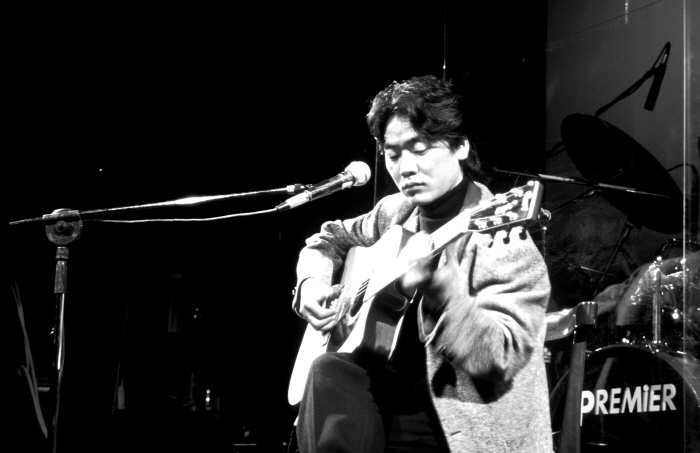
바람이 불어오는 곳 live performance 1995.6.29
Where It Takes You
What does “바람이 불어오는 곳” mean? The song never quite answers this — and that, perhaps, is the point.
At its most personal, the song can be read as a love song. “그대” — the figure addressed throughout — could be a specific person, someone the narrator is traveling toward or writing to from a rattling train. The longing for a voice, the hair echoed in swaying trees, the letter being written: all of it points toward someone loved and distant.
But “그대” in Korean can be more than a person. It can be a feeling, a place, a state of being. Read this way, the song becomes something closer to a search for freedom — the narrator following the wind not toward another person, but toward an open life, unencumbered, defined only by where the wind leads and where the sunlight welcomes.
There is also a more collective reading. The images of harmony — skies and faces felt beneath the eyes, dreams to come, a horizon held steady against the waves — suggest something beyond the personal. The place where the wind finds you could be a vision of a world more peaceful, more whole: a horizon not just navigated but aspired to.
What holds all these readings together is the song’s fundamental posture: surrender and hope at once. The narrator does not know exactly where he is going. He knows only that the wind is calling, and that he must follow. Whether that destination is a person, freedom, or a dream of something better — the journey, and the willingness to take it, might be the same. The song does not choose between these readings. It holds them all open, and leaves the rest to whoever is listening.
In His Own Words
And yet, Kim Kwang-seok himself might have smiled at all of this. In a note written shortly after the song’s release, he described its origins plainly: a broadcaster asked him to write a theme for a travel program, and he did. He wanted people to feel comfortable, to feel joyful. He added, almost in passing, that singing it sometimes made him want to set off on a journey himself.
There is something quietly moving about that. A song born from a simple commission somehow became a vessel large enough to hold a generation’s worth of longing. Kim Kwang-seok was not trying to write an anthem. He was trying to write something that made people feel free. Perhaps that is exactly why it means something different to everyone who hears it.
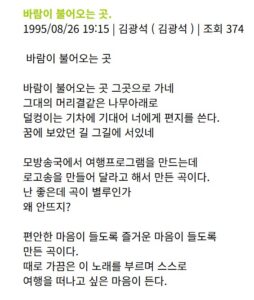
I like it — but is the song not good enough?
How come nobody’s listening?
I wrote this song so people can feel relaxed, feel joyful.
Sometimes, singing this song makes me want to set off on a journey myself.
This note comes directly from Kim Kwang-seok himself. In August 1995, about a year after the song’s release, he posted this on 둥근소리, an early Korean online music forum — writing under his own name, in the unpretentious way that was characteristic of him.
It is a remarkably unguarded thing to read. No grand artistic statement, no mythology. Just a songwriter, puzzled that his song wasn’t yet finding its audience — unaware that it would go on to find millions.
Discover more from Translating Korea
Subscribe to get the latest posts sent to your email.